
I. The Function of Car Air Conditioning
‘Air conditioning’ is a term with which people are very familiar, as air conditioning units (commonly referred to as ‘air con’) are installed in many workplaces and homes. Air conditioning refers to the regulation of the temperature, humidity and freshness of the air within an enclosed space, so that the indoor environment is optimised for human comfort. As shown in the diagram.

(2) Functions of a Car Air-Conditioning System
A car air-conditioning system is a system fitted to a motor vehicle whose purpose is to regulate the temperature, humidity and air quality inside the vehicle, thereby enhancing the comfort of the driver and passengers.
The automatic air-conditioning systems fitted to modern cars offer a comprehensive range of functions, including heating, cooling, air purification, ventilation, air temperature control and automatic climate control.
1. Heating function: The heating system heats and dehumidifies the air inside the vehicle or the fresh air entering from outside, ensuring a ‘warm’ and comfortable environment inside the vehicle.
2. Cooling function: The cooling system cools and dehumidifies the air inside the vehicle or the fresh air entering from outside, ensuring a ‘cool’ and comfortable environment inside the vehicle.
3. Air Purification Function: The air purification device removes dust and odours from the air entering the vehicle, ensuring the cabin air remains clean. Currently, air-conditioning systems in standard cars typically do not feature air purification, or only provide basic dust filtration; air-conditioning systems with more comprehensive air purification functions are more commonly found in some high-end saloon cars or luxury coaches.
4. Ventilation and Air Temperature Control Functions: The ventilation system draws fresh air from outside the vehicle into the cabin to provide ventilation and air exchange; the air temperature control function organically blends cold air, hot air and fresh air to create a suitable airflow for the cabin. As shown in the figure.
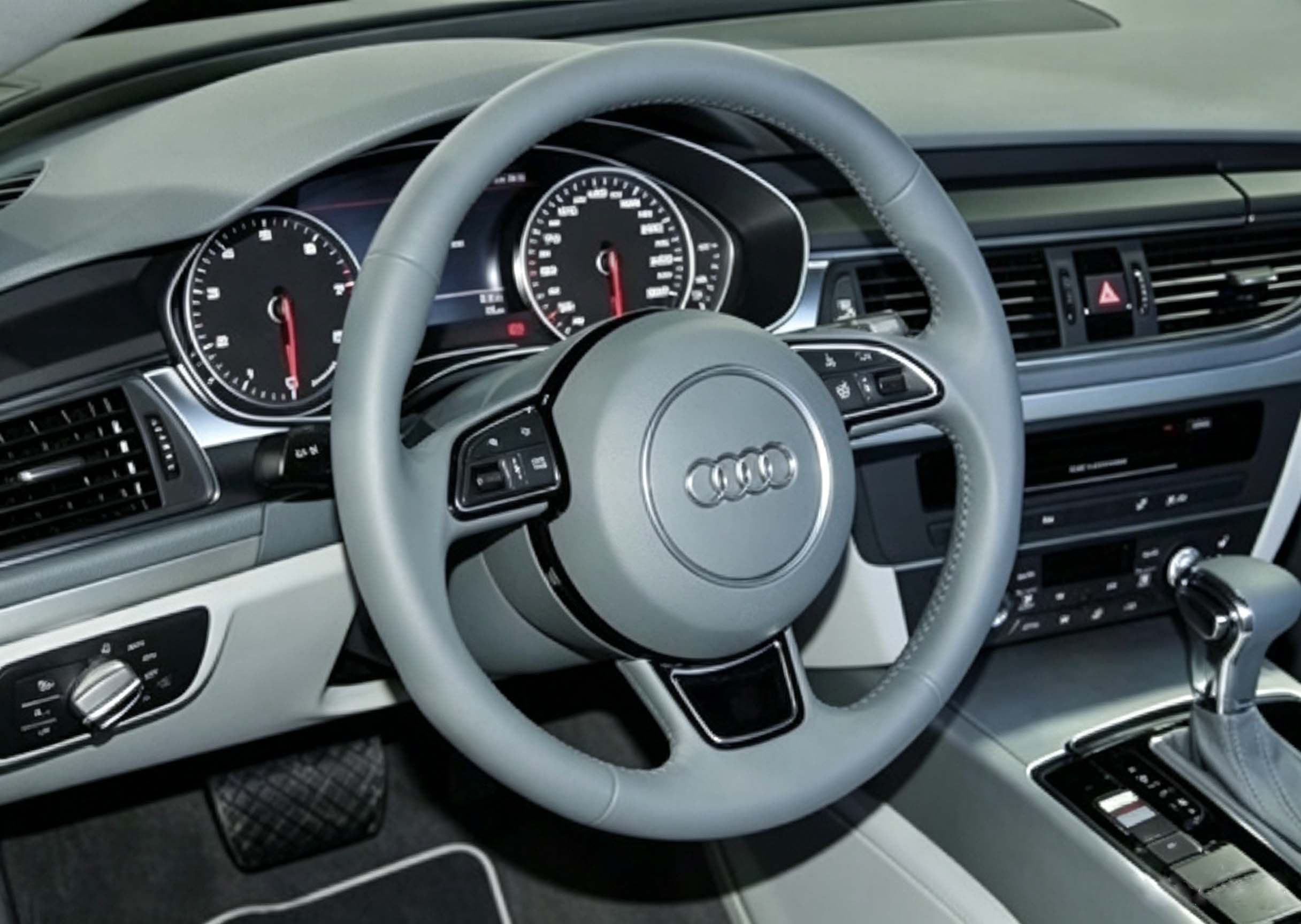
5. Automatic control functions: Modern automotive automatic air-conditioning systems utilise an electronic control system to automatically coordinate cooling, heating and ventilation, providing the passenger compartment with air at a comfortable temperature and with appropriate airflow and direction; in other words, they offer optimal, all-season, all-round and multi-functional control of the cabin environment.
II. Indicators for Assessing the Quality of Car Air Conditioning Systems
The purpose of a car air conditioning system is to ensure that the air quality inside the vehicle is optimised for human comfort. A person’s perception of comfort within the vehicle is influenced by factors such as air temperature, humidity, air velocity and air freshness. The ability to regulate the air inside the vehicle to a level that is most comfortable for the occupant serves as the benchmark for assessing the quality of a car air conditioning system.
(1) Air Temperature
Air temperature is the most important indicator of the quality of a car’s air conditioning system. The most comfortable temperature for humans is 22–28 °C in summer and 16–18 °C in winter. In winter, if the temperature falls below 14 °C, people will feel cold; the lower the temperature, the more likely their hands and feet are to stiffen, leading to reduced dexterity and compromising driving safety; when the temperature drops to 0 °C, frostbite may occur. In summer, if the temperature exceeds 28 °C, people will feel hot; the higher the temperature, the more severe the symptoms of dizziness, lack of concentration and mental sluggishness become, which can easily lead to road accidents; if the temperature exceeds 40 °C, it may cause harm to human health.
In addition to the impact of temperature levels on human comfort, the distribution of temperature also affects the sensation of comfort. The ideal temperature distribution for the human body is a cool head and warm feet; the comfortable temperature for the head should be 1.5–2°C lower than that for the feet, with a temperature difference of around 2°C.
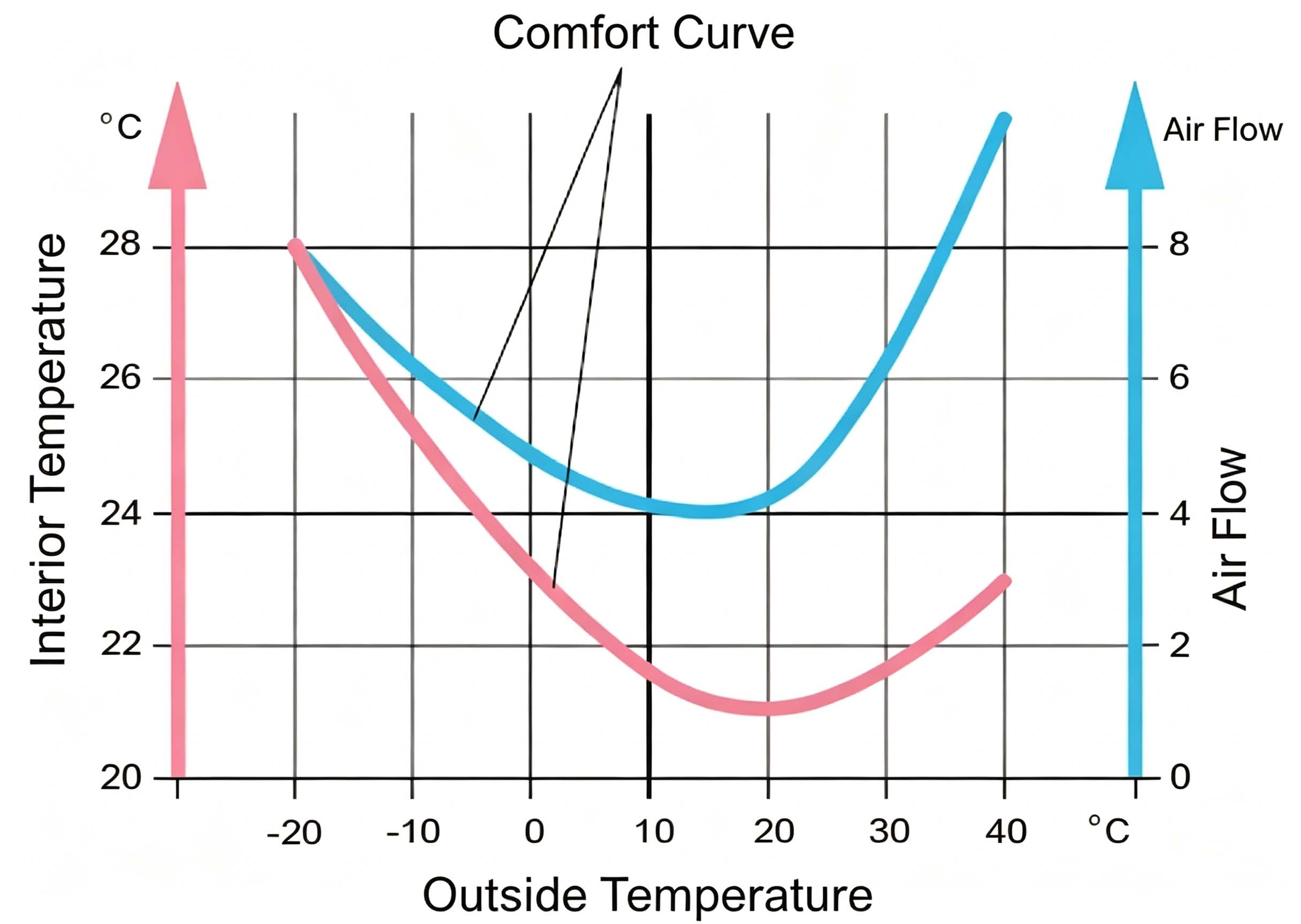
A comfortable interior temperature is determined by the current outside temperature and a sufficiently high airflow rate, as shown in the diagram.
(2) Air Humidity
Air humidity is another indicator of the quality of a car’s air conditioning system; people typically use the terms ‘damp air’ and ‘dry air’ to describe humidity levels that are too high or too low, respectively. The optimal relative humidity for the human body is 50 per cent to 60 per cent in summer and 40 per cent to 50 per cent in winter. Within this range, people feel comfortable and their skin remains smooth and supple. If humidity is too low (15 per cent to 30 per cent), the skin becomes dry, and friction between clothing and the skin generates static electricity, causing considerable discomfort; if humidity is too low, the skin may crack due to dehydration. If humidity is too high (90 per cent to 95 per cent), moisture cannot evaporate from the skin, disrupting the body’s normal metabolism; excessively high humidity creates a ‘stuffy’ sensation and can have adverse effects on health.
(3) Airflow velocity
Airflow velocity is another parameter that reflects the quality of a car’s air conditioning system. Airflow facilitates heat dissipation from the body; an appropriate airflow velocity should be within the range of 0.075–0.2 m/s. Low airflow speeds are perceived as comfortable, whereas excessively high speeds can cause discomfort.
(4) Air freshness
Air freshness is another indicator of the quality of a car’s air conditioning system. Fresh air should be rich in oxygen and low in CO₂ (<0.03 per cent) and CO (<0.01 per cent), as well as low in dust. As the interior of a car is a relatively confined space, the air can easily become stale, causing discomfort and posing a risk to the health of the driver and passengers. If CO₂ levels exceed 1.0 per cent or CO levels exceed 0.03 per cent, this will seriously affect the health of the driver and passengers.
FAQ:
1. Q: How about your Quality Controlling System?
A: Each step of our production process have the quality checking workers. They will check the products one by one before going to next production step. And before package, our QC workers will choose 15% of the cargo to check the quality again to make sure the cargo is with good quality. If the 15% products have around 1% with defects, we will recheck all pieces of the cargo. And our quality warranty is 2 years. If any quality issues feedback from our customers, we will fully take charge of it.
2. Q: How long is your delivery term?
A: Our standard product delivery term is normally 30 days.A new product development is 60days including the mass production. Under normal circumstances there are standing stock for regular types.You can email us to learn more details.
3. Q: How many years is your company in auto parts business field?
A: Our Company started since 2005,there is about 19 years history forus in auto parts business field.
4. Q:Are you trading company or factory?
A: We are factory with trading company.
5. Q:What's the MOQ for each item?
A: Our business way is spot sales,if the items we have stock,there is no limitation for MOQ to be manufactured based on your order.


 Whatsapp :
  Телефон :
  Эл.адрес :